Products
Home /

Precision Optics

/

Polarization optics

/Polarizing Beamsplitter Cubes

Polarizing Beamsplitter Cubes

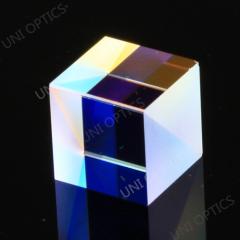
Polarization Beamsplitter Cubes are constructed by cemented two right angle prisms, the hypotenuse of one prism is coated with polarization dielectric coating.

When used with normal incident, un-polarized light, the incident beam is separated into two polarized beams, p-polarized component is passed straight through, s-polarized component is reflected out at 90deg.
  • product origin:

    China
  • shipping port:

    Fuzhou China
  • lead time:

    4 working weeks
  • payment:

    T/T Payment, Western Union
Inquiry now
  • description

1、What is a Polarizing Beamsplitter Cube?


A polarizing beamsplitter cube consists of two right angle prisms cemented together. The hypotenuse face of one prism is coated with a special multi layer dielectric coating. When circularly polarized or natural light enters the cube vertically, it separated into two linearly polarized beams. The transmitted beam is P-polarized while the reflected beam is S-polarized.  And when a linearly polarized light comes in, it similarly divided into two beams. But the energy ratio of the two outgoing beams depends on the polarization of the incident beam. Polarizing beamsplitter cubes are available for many laser wavelengths and broadband ranges.


2、How does a polarizing beamsplitter Cube work?


Polarizing Beamsplitter is designed to split unpolarized light at a specific Reflection/Transmission (R/T) ratio with unspecified polarization tendencies. 

Polarizing beamsplitters are designed to split light into reflected S-polarized and transmitted P-polarized beams.


3、What is a Polarizing beamsplitter Cube used for?


Beamsplitter is also a kind of filter, it is used to split or combine laser beam. However Polarization BeamSplitters are used to split or combine two perpendicular polarization laser beam. The performance of beam splitter depends on the coating specifications.  They are common components in laser or illumination systems. Also ideal for fluorescence applications, optical interferometry, or life science or semiconductor instrumentation. Light can be split by percentage of overall intensity, wavelength, or polarization state. 


To select a suitable beamsplitter, you need to consider the type, coating, transmission range and damage threshold. 


Specifications:
 
Material: BK7 Grade A Optical Glass
Dimension Tolerance: +/-0.2mm
Flatness: λ/4@633nm
Beam deviation: 3 arc min
Surface Quality: 60-40
Extinction Ratio: 100:1
Principal Transmittance: Tp>95% and Ts<1%
Principal Reflectance:Rs>99% and Rp<5%
Coating: Hypotenuse face Polarization Beamsplitter Coating
             All Input and Output face AR Coating
 
Standard
Wavelength(nm)
488,514.5,532,632.8,635,670,
780,850,980, 1064,1300,1550
Size (mm) 3.2x3.2x3.2 5x5x5 10x10x10 12.7x12.7x12.7 15x15x15 20x20x20
Part NO. UPBS032 UPBS005 UPBS010 UPBS127 UPBS015 UPBS020
 
Note: Other sizes, split ratio and coating are available upon request.


Send a Message
If you have any problem when using the website or our products, please write down your comments or suggestions, we will answer your questions as soon as possible!Thank you for your attention!
If you have questions or suggestions,please leave us a message,we will reply you as soon as we can!
Related Products
Beamsplitters Plates
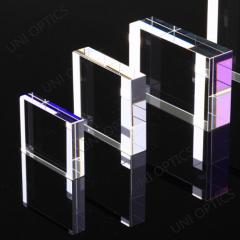
Visible and NIR Plate Beamsplitters
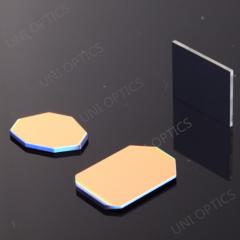
Our beamsplitter plates can be used in high power laser system. When using beamsplitter plates, it is important to make it in mind that the two partial beams travel in different optical paths. The optical paths depend on the incident angle and the thickness of plates.
Hi Precision Beamsplitters Cubes
Broadband Polarizing Cube Beamsplitters
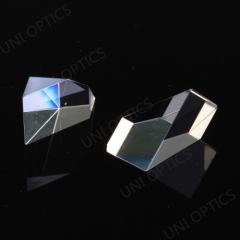
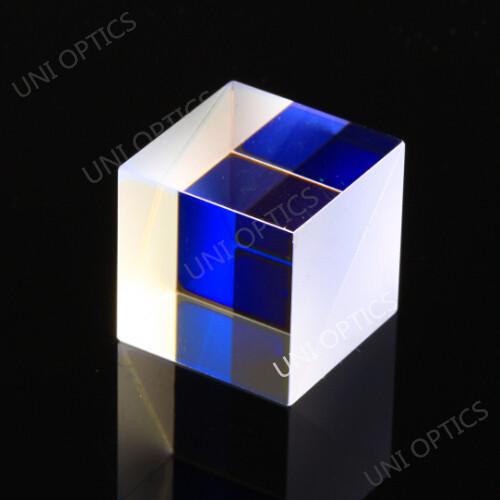
Beamsplitter Cubes are constructed by cemented two right angle prisms.  The hypotenuse of one prism is coated with polarization dielectric coating.
Non-Polarizing Cube Beamsplitters
Non-Polarizing Cube Beamsplitters (NPBS)
Non-Polarizing Cube Beamsplitters also called NPBS Cube is a more sophisticated type consisting of two right- angle prisms cemented together at their hypotenuse faces.The cemented face of one prism is coated. Before cementing, with a metallic or dielectric layer having the desired reflecting properties, both in the percentage of reflection and the desired color. The absorption loss to the coating is minimal and transmission and reflection could be designed to 10%, 20%, 30%, 40%, 50%, etc.
Laser Prisms
Laser Grade Prisms
Prisms are transparent optical devices which refract or reflect light. They have manifold applications in laser technology.
Laser Crystal
Optical Crystals

Crystal are main applied for laser application. UNI OPTICS offers the following crystal products.

1. Laser Crystals and Rods: YAG crystal, Nd: YVO4 Crystal

2. Nonlinear Crystals: BBO, KTP, LiNbO3, LBO. KDP&DKDP
3. Birefringent Crystals: YVO4, a-BBO, Calcite.

IR Optics material
Infrared Optics Material

1Silicon (Si) 


Silicon (Si) is grown by Czochralski pulling techniques (CZ) and contains some oxygen that causes an absorption band at 9 microns.To avoid this, material can be prepared by a Float-Zone (FZ) process. Optical silicon is generally lightly doped (5 to 40 ohm cm) for best transmission above 10 microns, and doping is usually boron (P-type) and phosphorus (N-type). After doping silicon has a further pass band: 30 to 100 microns which is effective only in very high resistivity uncompensated material.
 
CZ Silicon is commonly used as substrate material for infrared reflectors and windows in the 1.5-8 micron region. The strong absorption band at 9 microns makes it unsuitable for CO2 laser transmission applications, but it is frequently used for laser mirrors because of its high thermal conductivity and low density. Application as window, lens in the 1.5 - 8 um region; Mirror for CO2 laser and spectrometer applications.
 

Crystallographic properties
Syngony Cubic
Lattice Constant, A 5.43
Physical properties
Density 2.33g/cm3
Hardness, Mohs 7
Dielectric Constant for 9.37 x 10⁹ Hz 13
Melting point, оС 1414
Thermal Conductivity, W/m·K at 313 K 163
Thermal Expansion, 1/K at 293 K 2.6x10⁻⁶
Specific Heat Capacity, J/(kg°C) 712.8
Bandgap, eV 1.1
Knoop Hardness, kg/mm2 1100
Youngs Modulus, Gpa 130.91
Shear Modulus, GPan 79.92
Bulk Modulus, GPa 101.97
Debye Temperature, K 640
Poissons Ratio 0.28
Chemical properties
Solubility in water None
Molecular Weight 28.09

2. ZnS material:


ZnS MultiSpectral Under intense heat and pressure, defects within the crystalline lattice are virtually eliminated, leaving a water-clear material with minimal scatter and high transmission characteristics from 0.4 to 12 microns. This material is particularly well suited for high-performance common aperture systems that must perform across a broad wavelength spectrum.

Specifications:

Material: ZnS MultiSpectral
Diameter Tolerance: --------------------- +0.0, -0.1mm
Thickness Tolerance: -------------------- ±0.1mm
Clear Aperture: ---------------------------->85%
Parallelism: -----------------------------------3 arc minute
Surface Quality: ----------------------------80-50 scratch and dig
Wavefront Distortion: -------------------- λ /2 per 25mm @633mm
Bevel: -----------------------------------------Protective  (<0.2mm x 45° )
Coating: -------------------------------------- Optional (Uncoated, AR Coating, etc.)


3. ZnSe material


ZnSe is a preferred material for lenses, windows, output couplers and beam expanders for its low absorptivity at infrared wavelengths and its visible transmission. For high-power applications, it’s critical that the material bulk absorption and internal defect structure be carefully controlled, that minimum-damage polishing technology be employed, and the highest quality optical thin-film coatings are used. The material absorption is verified by CO2 laser vacuum calorimetry. Our quality assurance department provides testing and specific optics certification on request.

ZnSe is non-hygroscopic and chemically stable, unless treated with strong acids. It’s safe to use in most industrial field, and laboratory environments.


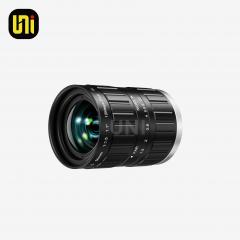
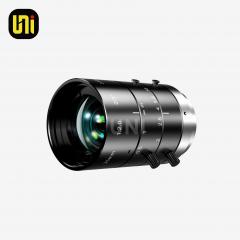
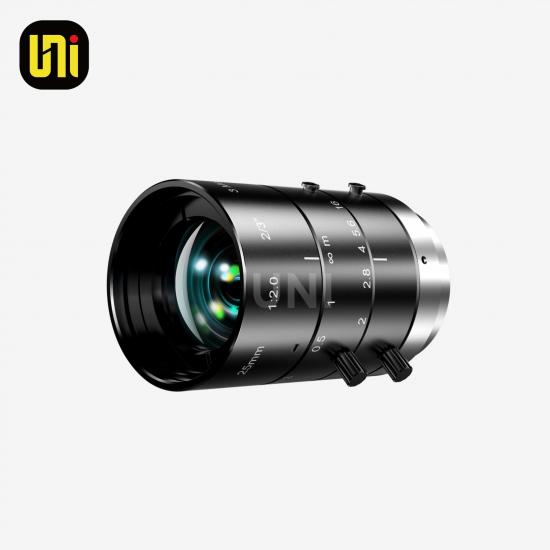
UN-TFA0828S-6MP
UN-TFA0828S-6MP

Product Features:


· Developed for 1/1.8" image format
· Low distortion
· High relative illumination

· Focus and iris fixed with screw


Product information: Custom designs are available upon request.
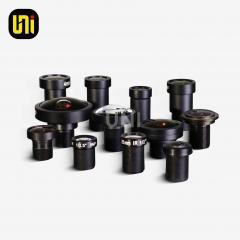
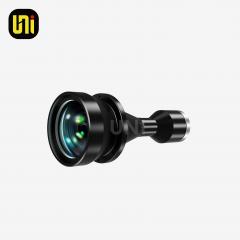
concave-convex aspherical lens
Concave-convex Lens
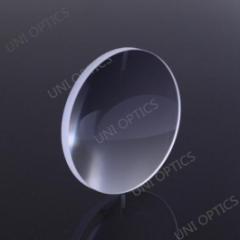
Concave-convex aspherical lenses are commonly used to correct spherical aberration and improve imaging quality in optical systems, especially where high resolution and compact design are required. Their aspherical surface design enables better light focusing and reduced distortion compared to traditional spherical lenses. 
Subscribe Our Newsletter
get in touch
REQUEST A FREE QUOTE
If you have any problem when using the website or our products, please write down your comments or suggestions, we will answer your questions as soon as possible!Thank you for your attention!

Copyright © UNI OPTICS CO., LTD © All Rights Reserved.

leave a message

Home

Products

COMPANY

Contact