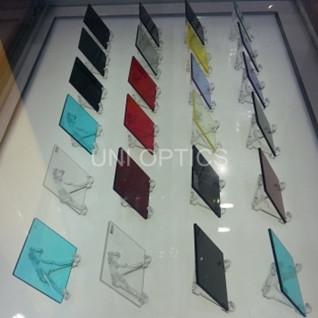
UNI Optics supply material include neutral density, short pass, long pass, band pass, ultraviolet, infrared,heat absorbing, and color temperature conversion filters. Just point and click on the name above to view information on that manufacturers filters.
UNI Optics supply material include neutral density, short pass, long pass, band pass, ultraviolet, infrared,heat absorbing, and color temperature conversion filters. Just point and click on the name above to view information on that manufacturers filters.
| Comparative Type of Colored Filter Glass | |||||||||
| Type | China | Schott | Hoya | Type | China | Schott | Hoya | ||
|
CUT-Off Type |
Ultraviolet Glass |
ZJB260 |
Selective Absorption Type |
Green Glass |
LB1 | VG9 | |||
| ZJB280 | WG280 | UV-28 | LB2 | VG11 | |||||
| ZJB300 | WG295 | UV-30 | LB3 | ||||||
| ZJB320 | WG320 | UV-32 | LB4 | ||||||
| ZJB340 | WG345 | UV-34 | LB6 | ||||||
| ZJB360 | WG360 | UV-36 | LB7 | VB8 | G-533 | ||||
| ZJB380 | GG375 | L-38 | LB8 | ||||||
|
Golden Glass |
JB400 | GG400 | L-40 | LB9 | VB10 | ||||
| JB420 | GG420 | Y-42 | LB10 | G-550 | |||||
| JB450 | GG455 | Y-44 | LB11 | ||||||
| JB470 | GG475 | Y-46 | LB12 | ||||||
| JB490 | GG495 | Y-48 | LB13 | G-545 | |||||
| JB510 | GG515 | Y-50 | LB14 | ||||||
|
Orange Glass |
CB535 | GG530 | 0-54 | LB15 | |||||
| CB550 | GG550 | LB16 | |||||||
| CB565 | GG570 | 0-56 | LB17 | VB5 | |||||
| CB580 | GG590 | 0-58 | LB18 | VB6 | |||||
|
Red Glass |
HB600 | R-60 | LB19 | ||||||
| HB610 | RG610 |
Golden Glass |
JB1 | GG19 | |||||
| HB630 | RG630 | R-62 | JB9 | GG10 | |||||
| HB640 | RG645 | R-64 |
Orange Glass |
CB1 | |||||
| HB650 | R-66 | CB2 | |||||||
| HB670 | RG665 |
Red Glass |
HB1 | ||||||
| HB685 | R-68 | HB3 | RG6 | ||||||
| HB700 | RG695 | R-70 | HB5 | ||||||
| HB720 | RG715 | R-72 | HB6 | ||||||
|
Infrared Glass |
HWB760 | IR-76 |
Infrared Glass |
HWB1 | RM-86 | ||||
| HWB780 | RG780 | HWB3 | RG7 | RM-90 | |||||
| HWB800 | IR-80 | HWB4 | |||||||
| HWB830 | RG830 | IR-83 |
Protective Glass |
FB1 | |||||
| HWB850 | IR-85 | FB3 | |||||||
| HWB900 |
Heat- absorbing Glass |
GRB1 | KG2 | HA-50 | |||||
| HWB930 | GRB3 | KG30 | HA-30 | ||||||
|
Selective Absorption Type |
Ultraviolet Glass |
ZWB1 | UG11 | U-340 |
Multiband Calibration Glass |
PNB586 | BG20 | V-10 | |
| ZWB2 | UG1 | U-360 | HOB445 | HY1 | |||||
| ZWB3 | UG5 | U-330 | |||||||
|
Sky-light Glass |
TB1 | SL-1A | |||||||
|
Violet Glass |
ZB1 | B-390 | TB2 | L-1B | |||||
| ZB2 | BG3 |
Rising Color Temperature Glass |
SSB40 | ||||||
| ZB3 | B-370 | SSB145 | |||||||
| QB1 | SSB165 | ||||||||
|
Blue Glass |
QB2 | B-410 | SSB200 | ||||||
| QB3 |
Falling Color Temperature Glass |
SJB20 | |||||||
| QB4 | SJB80 | ||||||||
| QB5 | B-440 | SJB100 | |||||||
| QB9 | SJB130 | ||||||||
| QB10 | SJB140 | ||||||||
| QB11 | BG14 |
Neutral Type |
Neutral Grey Colored Glass |
ZAB00 | NG1 | ND-0 | |||
| QB12 | B-460 | ZAB02 | NG9 | ND-03 | |||||
| QB13 | ZAB2 | NG3 | |||||||
| QB16 | ZAB5 | ||||||||
| QB17 | ZAB10 | NG4 | ND-13 | ||||||
| QB18 | ZAB25 | NG5 | ND-25 | ||||||
| QB19 | ZAB30 | ||||||||
| QB21 | BG38 | ZAB50 | NG11 | ND-50 | |||||
| QB23 | BG7 | B-480 | ZAB65 | ||||||
| QB24 | BG12 | ZAB70 | NG11 | ND-70 | |||||
| QB26 | BG18 | Note: Some type glass are produced sparely, you can consult with us and order it to us. | |||||||
Prev :
UV Fused SilicaNext :
Optical Grade Glass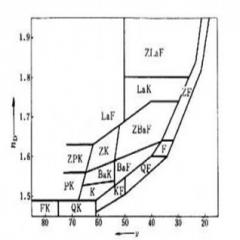 Optical Grade Glass
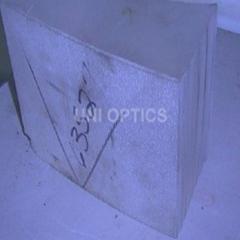 UV Fused Silica
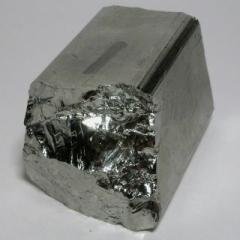 Infrared Optics Material
1. Silicon (Si)
Silicon (Si) is grown by Czochralski pulling techniques (CZ) and contains some oxygen that causes an absorption band at 9 microns.To avoid this, material can be prepared by a Float-Zone (FZ) process. Optical silicon is generally lightly doped (5 to 40 ohm cm) for best transmission above 10 microns, and doping is usually boron (P-type) and phosphorus (N-type). After doping silicon has a further pass band: 30 to 100 microns which is effective only in very high resistivity uncompensated material.
CZ Silicon is commonly used as substrate material for infrared reflectors and windows in the 1.5-8 micron region. The strong absorption band at 9 microns makes it unsuitable for CO2 laser transmission applications, but it is frequently used for laser mirrors because of its high thermal conductivity and low density. Application as window, lens in the 1.5 - 8 um region; Mirror for CO2 laser and spectrometer applications.
Crystallographic properties
Syngony
Cubic
Lattice Constant, A
5.43
Physical properties
Density
2.33g/cm3
Hardness, Mohs
7
Dielectric Constant for 9.37 x 10⁹ Hz
13
Melting point, оС
1414
Thermal Conductivity, W/m·K at 313 K
163
Thermal Expansion, 1/K at 293 K
2.6x10⁻⁶
Specific Heat Capacity, J/(kg°C)
712.8
Bandgap, eV
1.1
Knoop Hardness, kg/mm2
1100
Youngs Modulus, Gpa
130.91
Shear Modulus, GPan
79.92
Bulk Modulus, GPa
101.97
Debye Temperature, K
640
Poissons Ratio
0.28
Chemical properties
Solubility in water
None
Molecular Weight
28.09
2. ZnS material:
ZnS MultiSpectral Under intense heat and pressure, defects within the crystalline lattice are virtually eliminated, leaving a water-clear material with minimal scatter and high transmission characteristics from 0.4 to 12 microns. This material is particularly well suited for high-performance common aperture systems that must perform across a broad wavelength spectrum.
Specifications:
Material: ZnS MultiSpectral
Diameter Tolerance: --------------------- +0.0, -0.1mm
Thickness Tolerance: -------------------- ±0.1mm
Clear Aperture: ---------------------------->85%
Parallelism: -----------------------------------3 arc minute
Surface Quality: ----------------------------80-50 scratch and dig
Wavefront Distortion: -------------------- λ /2 per 25mm @633mm
Bevel: -----------------------------------------Protective (<0.2mm x 45° )
Coating: -------------------------------------- Optional (Uncoated, AR Coating, etc.)
3. ZnSe material
ZnSe is a preferred material for lenses, windows, output couplers and beam expanders for its low absorptivity at infrared wavelengths and its visible transmission. For high-power applications, it’s critical that the material bulk absorption and internal defect structure be carefully controlled, that minimum-damage polishing technology be employed, and the highest quality optical thin-film coatings are used. The material absorption is verified by CO2 laser vacuum calorimetry. Our quality assurance department provides testing and specific optics certification on request.
ZnSe is non-hygroscopic and chemically stable, unless treated with strong acids. It’s safe to use in most industrial field, and laboratory environments.
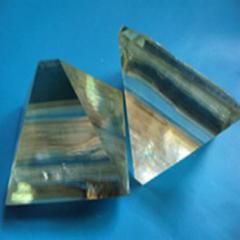 Optical Crystals
Crystal are main applied for laser application. UNI OPTICS offers the following crystal products.
1. Laser Crystals and Rods: YAG crystal, Nd: YVO4 Crystal
2. Nonlinear Crystals: BBO, KTP, LiNbO3, LBO. KDP&DKDP
3. Birefringent Crystals: YVO4, a-BBO, Calcite.
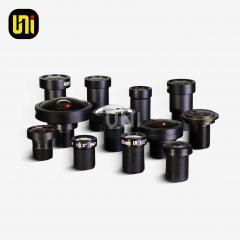 M12· Scanner Lens UN-UW16056C-16MP
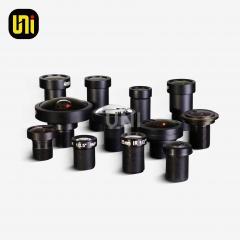 M12· Fixed-focal Lens UN-UW82C-5MP
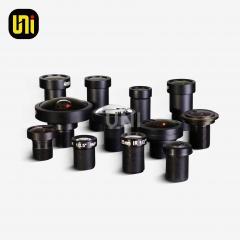 M12· Low Distortion Lens UN-UW00186024C-8.8MP
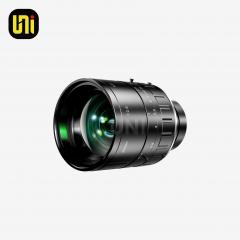 Line Scan Lens UN-ALS858K
For automotive polarizer & Mini LED backlight substrate testing, medium-grade fine-line FPC & IC carrier board AOI detection, solar cell EL hidden crack screening, narrow precision cold-rolled metal strip flaw inspection, pharmaceutical packaging & medium anti-counterfeit printing quality control and electronic ceramic substrate microscopic inspection.
· Developed for 32mm big frame sensor
· Large Aperture, up to F2.8· Excellent optical performance, uniform imaging of center and edge
Product information: Custom designs are available upon request.
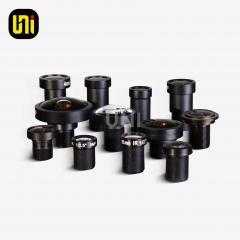 M12· Fixed-focal Lens UN-UW62C-5MP
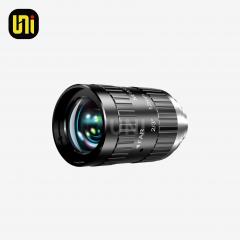 FA Lens UN-TFA1220C-10MP
For high-precision machine vision applications, broadly covering dimensional inspection and surface defect detection in consumer electronics, robotic vision guidance and positioning, as well as automotive component in-line measurement, and intelligent logistics & sorting systems and so on.
· High image contrast
· High brightness uniformity
· Suitable for 2.4u sensor
· Resolution up to 10MP
· Compact, lightweight and durable
Product information: Custom designs are available upon request.
Infrared Optics Material
1. Silicon (Si)
Silicon (Si) is grown by Czochralski pulling techniques (CZ) and contains some oxygen that causes an absorption band at 9 microns.To avoid this, material can be prepared by a Float-Zone (FZ) process. Optical silicon is generally lightly doped (5 to 40 ohm cm) for best transmission above 10 microns, and doping is usually boron (P-type) and phosphorus (N-type). After doping silicon has a further pass band: 30 to 100 microns which is effective only in very high resistivity uncompensated material.
CZ Silicon is commonly used as substrate material for infrared reflectors and windows in the 1.5-8 micron region. The strong absorption band at 9 microns makes it unsuitable for CO2 laser transmission applications, but it is frequently used for laser mirrors because of its high thermal conductivity and low density. Application as window, lens in the 1.5 - 8 um region; Mirror for CO2 laser and spectrometer applications.
Crystallographic properties
Syngony
Cubic
Lattice Constant, A
5.43
Physical properties
Density
2.33g/cm3
Hardness, Mohs
7
Dielectric Constant for 9.37 x 10⁹ Hz
13
Melting point, оС
1414
Thermal Conductivity, W/m·K at 313 K
163
Thermal Expansion, 1/K at 293 K
2.6x10⁻⁶
Specific Heat Capacity, J/(kg°C)
712.8
Bandgap, eV
1.1
Knoop Hardness, kg/mm2
1100
Youngs Modulus, Gpa
130.91
Shear Modulus, GPan
79.92
Bulk Modulus, GPa
101.97
Debye Temperature, K
640
Poissons Ratio
0.28
Chemical properties
Solubility in water
None
Molecular Weight
28.09
2. ZnS material:
ZnS MultiSpectral Under intense heat and pressure, defects within the crystalline lattice are virtually eliminated, leaving a water-clear material with minimal scatter and high transmission characteristics from 0.4 to 12 microns. This material is particularly well suited for high-performance common aperture systems that must perform across a broad wavelength spectrum.
Specifications:
Material: ZnS MultiSpectral
Diameter Tolerance: --------------------- +0.0, -0.1mm
Thickness Tolerance: -------------------- ±0.1mm
Clear Aperture: ---------------------------->85%
Parallelism: -----------------------------------3 arc minute
Surface Quality: ----------------------------80-50 scratch and dig
Wavefront Distortion: -------------------- λ /2 per 25mm @633mm
Bevel: -----------------------------------------Protective (<0.2mm x 45° )
Coating: -------------------------------------- Optional (Uncoated, AR Coating, etc.)
3. ZnSe material
ZnSe is a preferred material for lenses, windows, output couplers and beam expanders for its low absorptivity at infrared wavelengths and its visible transmission. For high-power applications, it’s critical that the material bulk absorption and internal defect structure be carefully controlled, that minimum-damage polishing technology be employed, and the highest quality optical thin-film coatings are used. The material absorption is verified by CO2 laser vacuum calorimetry. Our quality assurance department provides testing and specific optics certification on request.
ZnSe is non-hygroscopic and chemically stable, unless treated with strong acids. It’s safe to use in most industrial field, and laboratory environments.
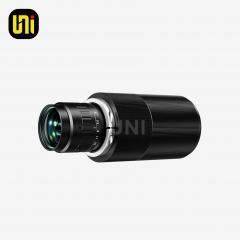 Line Scan Lens UN-ALS1164L-16K
For high-end PCB AOI inspection, Mini/Micro LED panel micro-defect detection, photovoltaic silicon wafer EL hidden crack inspection, narrow precision metal strip flaw detection, luxury printing anti-counterfeit texture inspection, electronic ceramic substrate microscopic inspection and high-precision linear dimension measurement of tiny electronic components.
· Developed for 66mm big frame sensor
· Low distortion
· Compatible for 16K line scan camera
· Excellent optical performance, uniform imaging of center and edge
Product information: Custom designs are available upon request.
Copyright © UNI OPTICS CO., LTD © All Rights Reserved.
 Tel : +86-591-86395085
 Email : sales@uni-optics.com