Precision Optics
Precision Optics

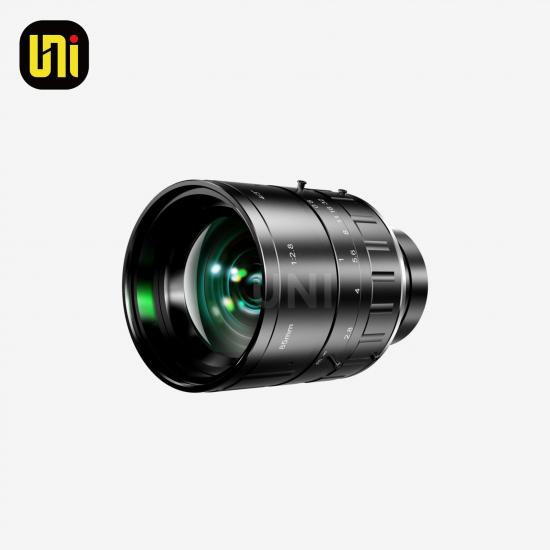
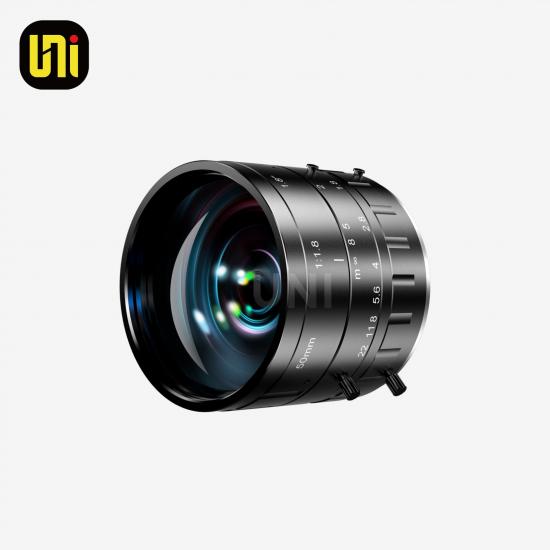
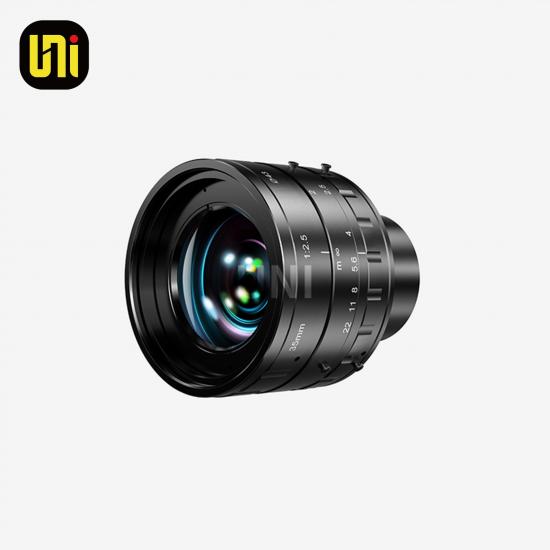
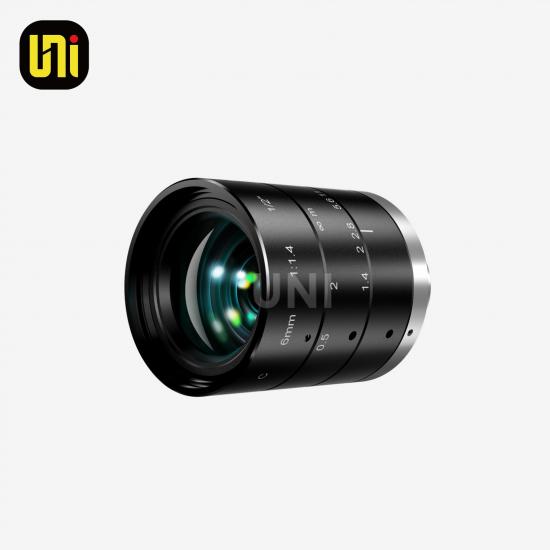
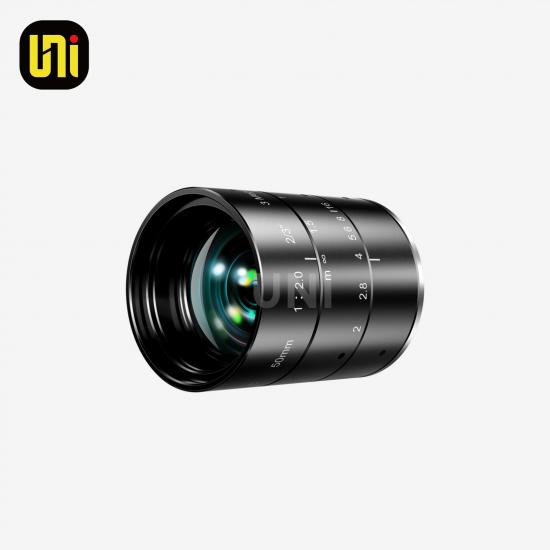
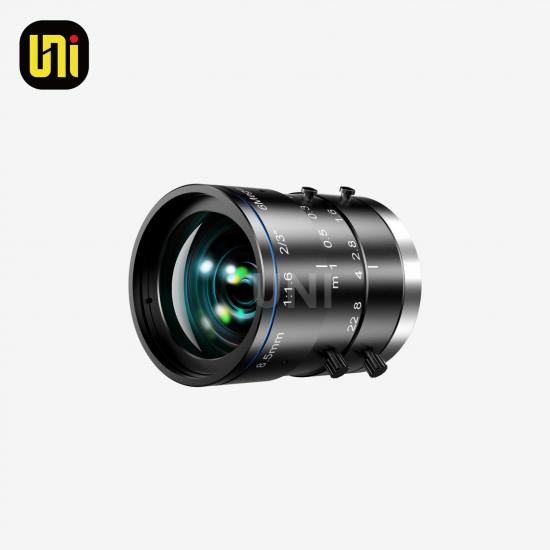
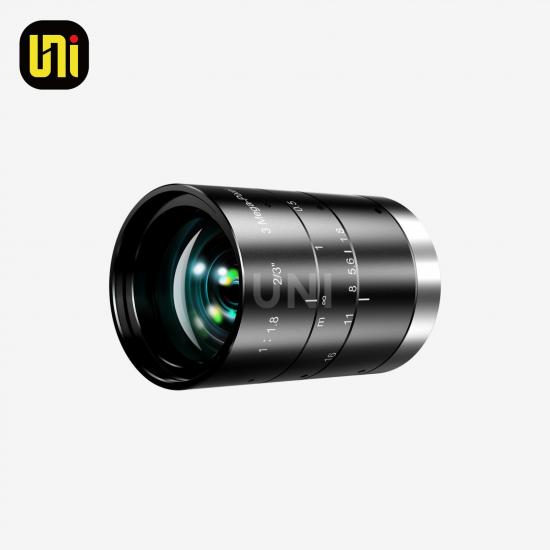
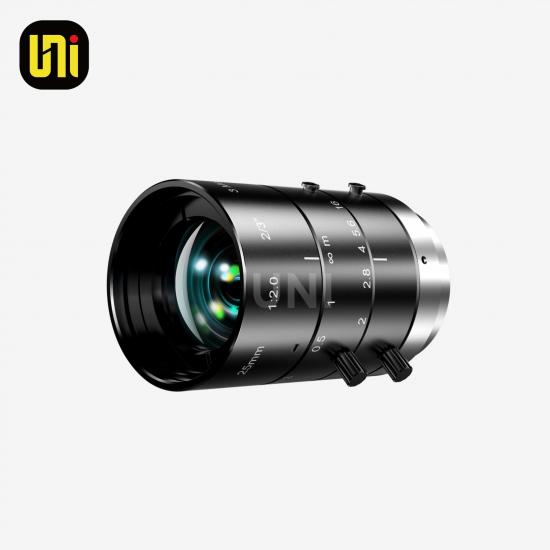
UNI Optics has specialized in high-precision optics and lens systems in China for many years. We provide our customers with one-stop optical solutions. Our highly skilled team with more than 15 years of experience in designing, manufacturing, assembling and testing. Our integrated assemblies, lenses, prisms, mirrors, and filters are widely used in machine vision, factory automation, lasers, medical, life science, biometric, and military applications.


From prototype to volume production, UNI Optics is focused on providing excellence in customer service. Whatever your requirements, we will work directly with you to ensure the project succeeds.


Typical products and services:
Optical design / Coating design / Mechanical design / Lens assembly system.
High resolution, low distortion, and wide-angle S-mount lens.
Machine vision filters(bandpass/ long pass/ UV-IR cut/ polarizing, etc.)
  • Micro Size Lens
    Micro Size Lens
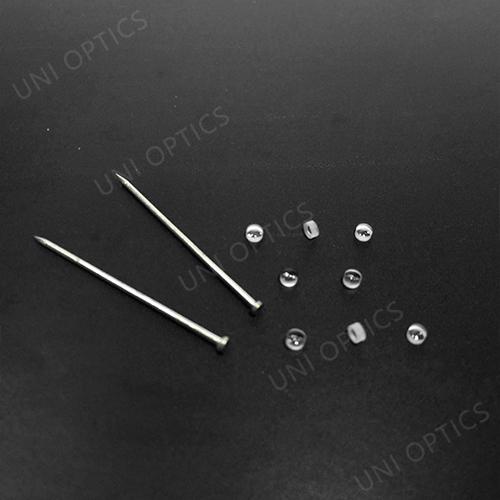
    Micro Size Lenses are commonly used in miniature imaging, sensing, and illumination applications where compact size is essential. Their small dimensions enable efficient light collection and focusing in tight spaces. UNI Optics offers a range of Micro Size Lenses in various materials for performance from the ultraviolet to the NIR.
    View More
  • concave-convex aspherical lens
    Concave-convex Lens
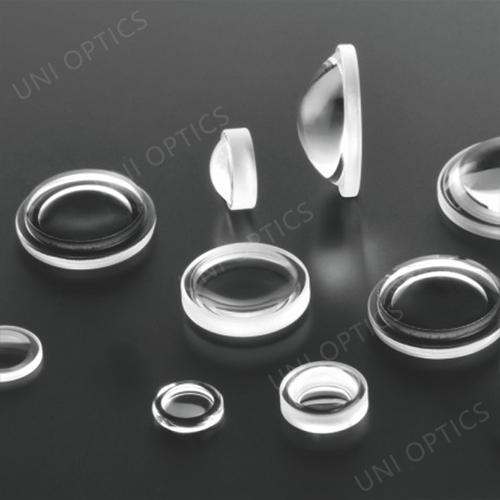
    Concave-convex aspherical lenses are commonly used to correct spherical aberration and improve imaging quality in optical systems, especially where high resolution and compact design are required. Their aspherical surface design enables better light focusing and reduced distortion compared to traditional spherical lenses. 
    View More
  • biconcave aspherical lens
    Biconcave Lens
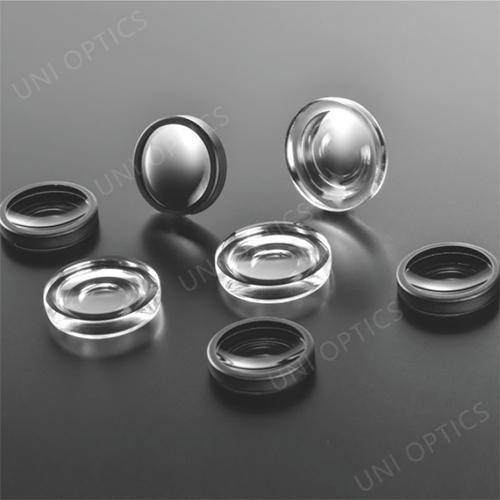
    Biconcave Aspherical Lenses are commonly used to control beam divergence in laser applications, or for use in imaging and sensor systems where precise light shaping is required. Their aspherical design helps reduce spherical aberration, providing improved optical performance compared to traditional spherical lenses. Biconcave Aspherical Lenses feature optimized profiles to achieve efficient beam expansion and uniform light distribution.
    View More
  • Biconvex aspherical lens
    Biconvex Lens
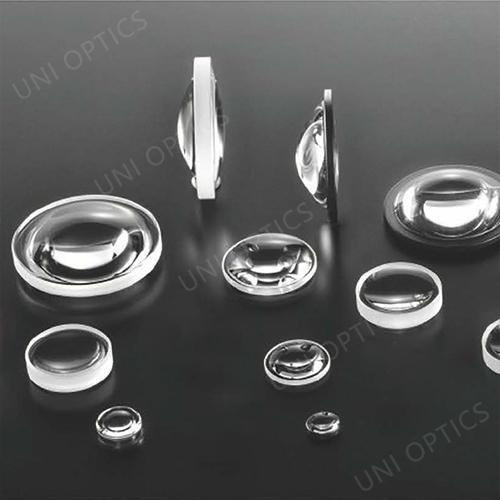
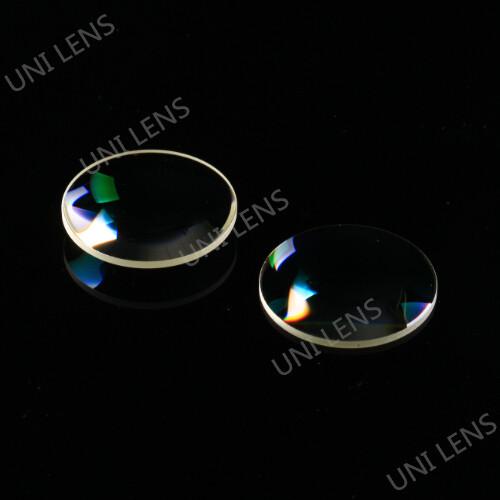
    Biconvex Aspherical Lenses are commonly used to focus or collimate light in imaging, laser, and sensor applications. Their aspherical surfaces help reduce spherical aberration and improve image quality compared to traditional spherical lenses. Biconvex Aspherical Lenses feature optimized profiles for high focusing efficiency and precise light control.
    View More
  • Custom Truncated Doublet and Singlet Lenses
    Custom Truncated Doublet and Singlet Lenses
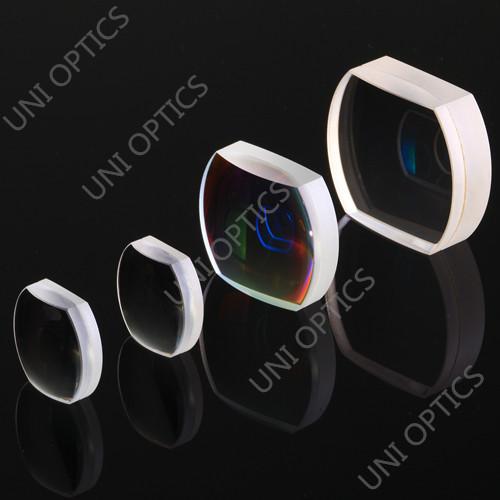
    Custom Truncated Doublet and Singlet Lenses from UNI Optics We offer an extensive custom truncated doublet lens service. With our 30 year heritage of experience in the industry means we can always find the right product and specification for you, whether you require exotic materials, or exceptionally tight tolerances, we are confident in our ability to supply to your complete satisfaction. The table below is a brief overview of our doublet lens  and is not an exhaustive list. If your individual requirements are not met, then please contact our technical sales team who will be happy to advise.es and is n’t an exhaustive list. If your individual requirements are not met, then please contact our technical sales team who will be happy to advise. Typical Specifications: Typical materials: Flint (N/F2) and Crown (BK7)                              Flint (SF6) and Crown (N-LAK22)                              UV & IR materials on request Diameter: 3mm to 200mm+ Focal length: 3mm to 1000mm+ Centration: < 3 arcseconds Surface figure: < 0.1 fringe Surface quality: < 10/5 Scratch/dig Coating options: Single layer and BBAR coatings for UV/VIS/NIR with R.avg.<0.25% More information on the achievable specifications for your individual application can be found by contacting our technical sales team. 
    View More
  • Laser Prisms
    Laser Grade Prisms
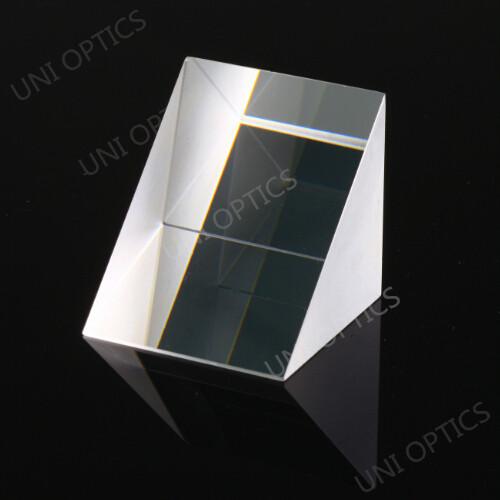
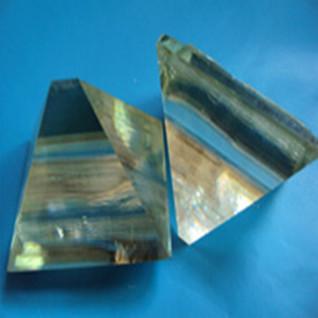
    Prisms are transparent optical devices which refract or reflect light. They have manifold applications in laser technology.
    View More
  • Laser Lenses
    Laser beam collimation Lens

    Laser Lenses are used to focus collimated light from laser beams in a variety of laser applications. Laser Lenses include a range of lens types including PCX Lenses, Cylinder Lenses, or Laser Generator Lenses. Laser Lenseare designed to focus light in several different ways depending on the lens type, such as focusing down to a point,  a line, or a ring. Many different lens types are available in a range of wavelengths.

    View More
  • Laser Windows
    High Power Laser Line Windows
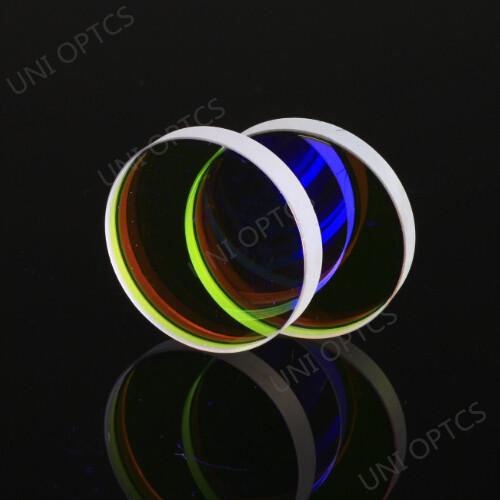
    1、What are laser windows? Laser Protect Windows(Laser protective glass, protective filters or welding protective windows) are used to save for the high cost of laser optics. 2、What are laser windows used for? These windows are normally used in applications like laser cutting, laser welding machine, they are used for avoiding the high-precision laser optics damage by material splashes. 3、The key features of UNI Optics' Laser Windows High Transmission High Damage Threshold Low Scatter Low Absorption Excellent Film Density Excellent Environmental Stability     Typical Specifications:   Dimension: 4mm-80mm, round or square Material: BK7, Fused Silica, ZnSe...etc Surface quality: 10/5 Surface flatness: Lambda/10@632.8nm Parallelism: 30’’ Roughness: 3A
    View More
  • BK7 Laser Grade Mirrors
    Laser Grade Line Mirrors
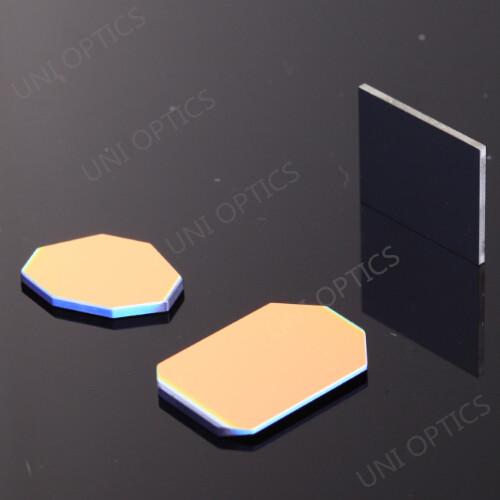
    Laser mirrors are fabricated with specialized coatings, which will offer high damage thresholds.
    View More
  • Laser Crystal
    Optical Crystals

    Crystal are main applied for laser application. UNI OPTICS offers the following crystal products.

    1. Laser Crystals and Rods: YAG crystal, Nd: YVO4 Crystal

    2. Nonlinear Crystals: BBO, KTP, LiNbO3, LBO. KDP&DKDP
    3. Birefringent Crystals: YVO4, a-BBO, Calcite.

    View More
  • IR Optics material
    Infrared Optics Material
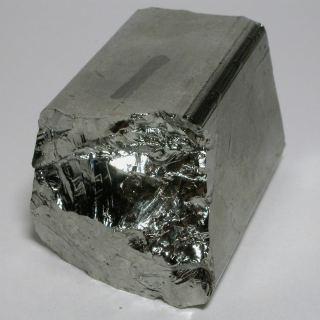
    1. Silicon (Si)  Silicon (Si) is grown by Czochralski pulling techniques (CZ) and contains some oxygen that causes an absorption band at 9 microns.To avoid this, material can be prepared by a Float-Zone (FZ) process. Optical silicon is generally lightly doped (5 to 40 ohm cm) for best transmission above 10 microns, and doping is usually boron (P-type) and phosphorus (N-type). After doping silicon has a further pass band: 30 to 100 microns which is effective only in very high resistivity uncompensated material.   CZ Silicon is commonly used as substrate material for infrared reflectors and windows in the 1.5-8 micron region. The strong absorption band at 9 microns makes it unsuitable for CO2 laser transmission applications, but it is frequently used for laser mirrors because of its high thermal conductivity and low density. Application as window, lens in the 1.5 - 8 um region; Mirror for CO2 laser and spectrometer applications.   Crystallographic properties Syngony Cubic Lattice Constant, A 5.43 Physical properties Density 2.33g/cm3 Hardness, Mohs 7 Dielectric Constant for 9.37 x 10⁹ Hz 13 Melting point, оС 1414 Thermal Conductivity, W/m·K at 313 K 163 Thermal Expansion, 1/K at 293 K 2.6x10⁻⁶ Specific Heat Capacity, J/(kg°C) 712.8 Bandgap, eV 1.1 Knoop Hardness, kg/mm2 1100 Youngs Modulus, Gpa 130.91 Shear Modulus, GPan 79.92 Bulk Modulus, GPa 101.97 Debye Temperature, K 640 Poissons Ratio 0.28 Chemical properties Solubility in water None Molecular Weight 28.09 2. ZnS material: ZnS MultiSpectral Under intense heat and pressure, defects within the crystalline lattice are virtually eliminated, leaving a water-clear material with minimal scatter and high transmission characteristics from 0.4 to 12 microns. This material is particularly well suited for high-performance common aperture systems that must perform across a broad wavelength spectrum. Specifications: Material: ZnS MultiSpectral Diameter Tolerance: --------------------- +0.0, -0.1mm Thickness Tolerance: -------------------- ±0.1mm Clear Aperture: ---------------------------->85% Parallelism: -----------------------------------3 arc minute Surface Quality: ----------------------------80-50 scratch and dig Wavefront Distortion: -------------------- λ /2 per 25mm @633mm Bevel: -----------------------------------------Protective  (<0.2mm x 45° ) Coating: -------------------------------------- Optional (Uncoated, AR Coating, etc.) 3. ZnSe material ZnSe is a preferred material for lenses, windows, output couplers and beam expanders for its low absorptivity at infrared wavelengths and its visible transmission. For high-power applications, it’s critical that the material bulk absorption and internal defect structure be carefully controlled, that minimum-damage polishing technology be employed, and the highest quality optical thin-film coatings are used. The material absorption is verified by CO2 laser vacuum calorimetry. Our quality assurance department provides testing and specific optics certification on request. ZnSe is non-hygroscopic and chemically stable, unless treated with strong acids. It’s safe to use in most industrial field, and laboratory environments.
    View More
  • UN Grade Fused Silica
    UV Fused Silica
    Fused Silica is formed by chemical combination of silicon and oxygen. Fused Silica is perfect optical material due to its good UV and IR transmission, low coefficient of thermal expansion. It has high stability and resistance to thermal shock over large temperature excursions, wide temperature operating range and high laser damage threshold.
    View More
Subscribe Our Newsletter
get in touch
REQUEST A FREE QUOTE
If you have any problem when using the website or our products, please write down your comments or suggestions, we will answer your questions as soon as possible!Thank you for your attention!

Copyright © UNI OPTICS CO., LTD © All Rights Reserved.

leave a message

Home

Products

COMPANY

Contact